
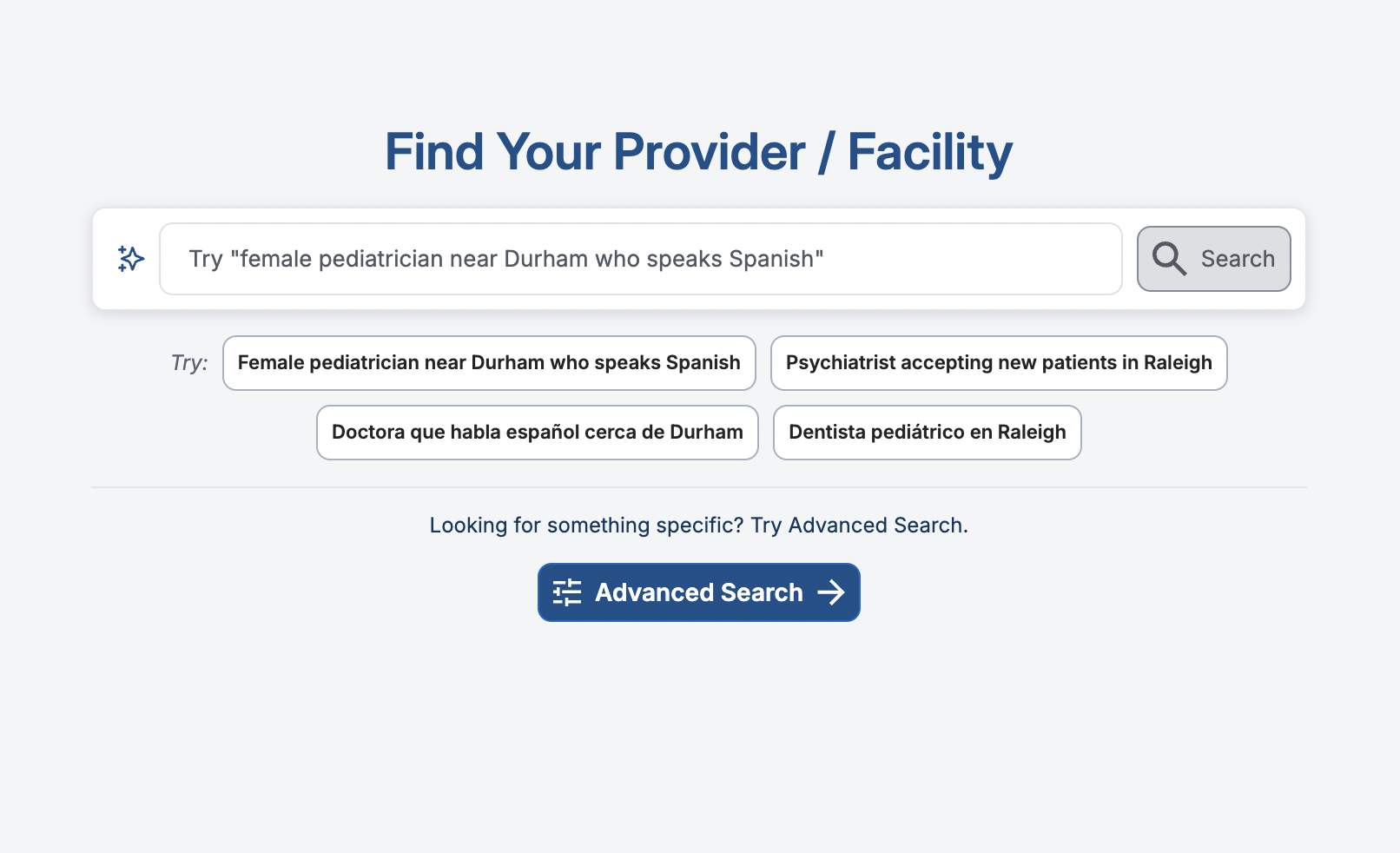
Alliance Health redesigned its provider directory so members and caregivers can search for care in plain language.

Provider directories were never built to be searched the way patients think. Provider specialty data is organized around numeric codes that payers use to route claims and verify network participation.1 That system works for billing, but it was never intended to support a member who might type "help for child with depression" land on the "mental health counselor" who will meet her need.
Alliance is solving that with a new natural language search (NLS) provider directory. Members and caregivers can now search in plain language, with search and results available in any language. Members can then refine results using filters mapped to Alliance's specific benefit design and network structure. Powering this change is Leap Orbit’s CareFinDr interface, and the Convergent platform normalizing and governing Alliance's provider data across source systems. The data shown on screen is up-to-date at the moment care is needed.
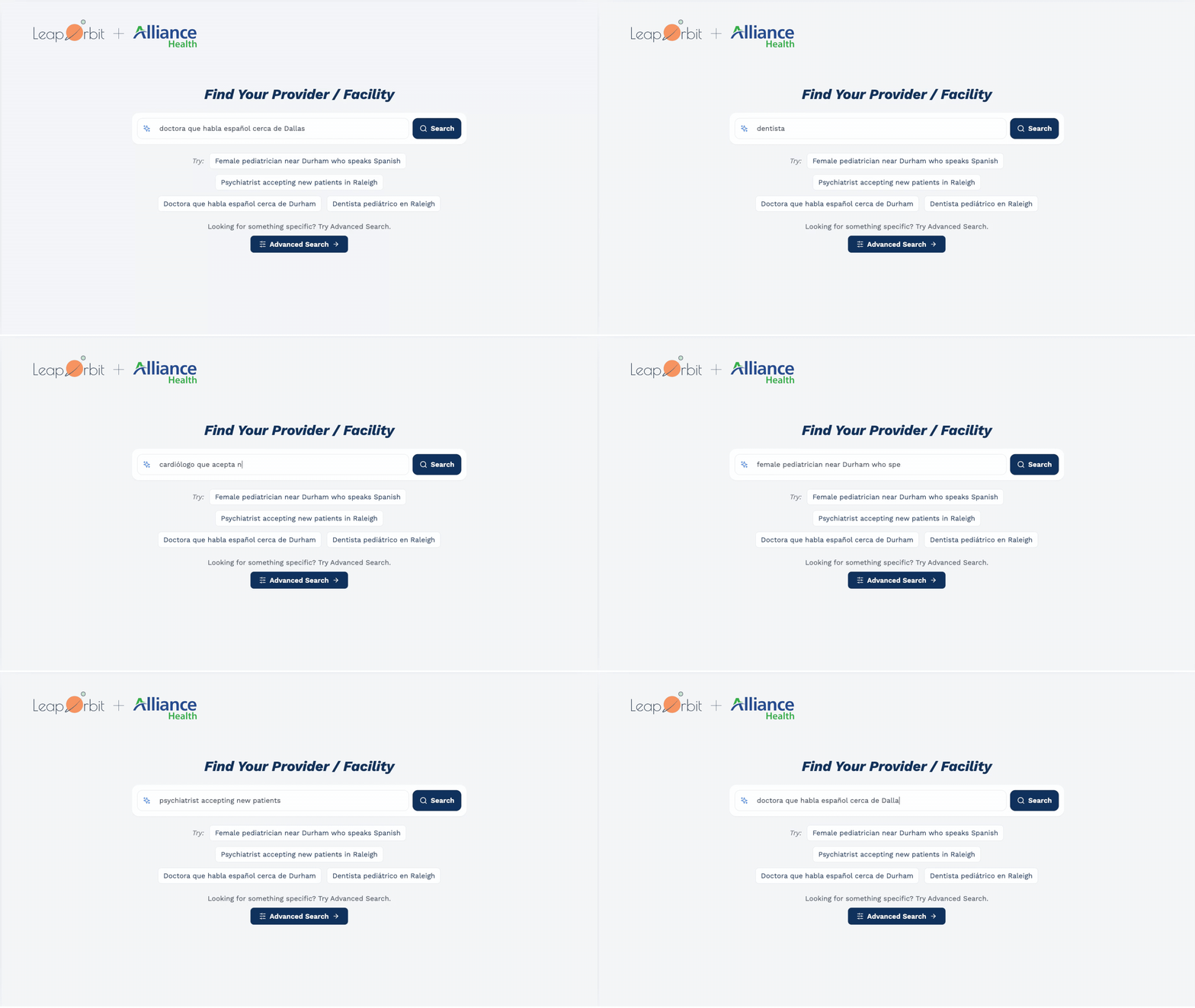
Alliance’s implementation treats search as part of the access infrastructure.
Because the BH/IDD landscape is a confusing maze of acronyms (e.g., LCSW, LMFT, PsyD, MD, LPC) and distinct therapeutic modalities, finding care is rarely a single search for this population. Traditional clinical-terminology-only search makes every one of those searches harder.
For a plan serving members who are both behavioral health and IDD populations, that burden compounds, and it rarely falls on one person alone. Between 39% and 52% of people with intellectual and developmental disabilities, an estimated one to two million people nationwide, also have a co-occurring psychiatric condition.2 Finding the right provider is frequently the job of a case manager, family member, or guardian, not just the member searching for themselves, so search that demands clinical fluency adds friction at every level of care coordination.
The terminology barrier is sharper still for the population doing the searching. An estimated 57.9% of people with intellectual disabilities and 40% of those with autism spectrum disorder experience communication difficulties that affect how they express needs and process information.3 A search experience that requires translating a feeling or symptom into the correct clinical term before it returns results is a structural barrier.
Artificial intelligence-driven NLS pushes back against the hidden "vocabulary tax" that currently blocks people from finding care.
Search functionality is the first thing a member or caregiver touches when they're trying to find help. Getting it right is part of how Alliance follows through on what a BH/IDD Tailored Plan is supposed to do: meet members where they are, not where a billing system assumes they should be. A parent who doesn't know the term "behavioral health specialist" still knows their child needs help. Alliance's redesigned search is built around that reality, not around the assumption that members and caregivers should already speak the system's language.
----