
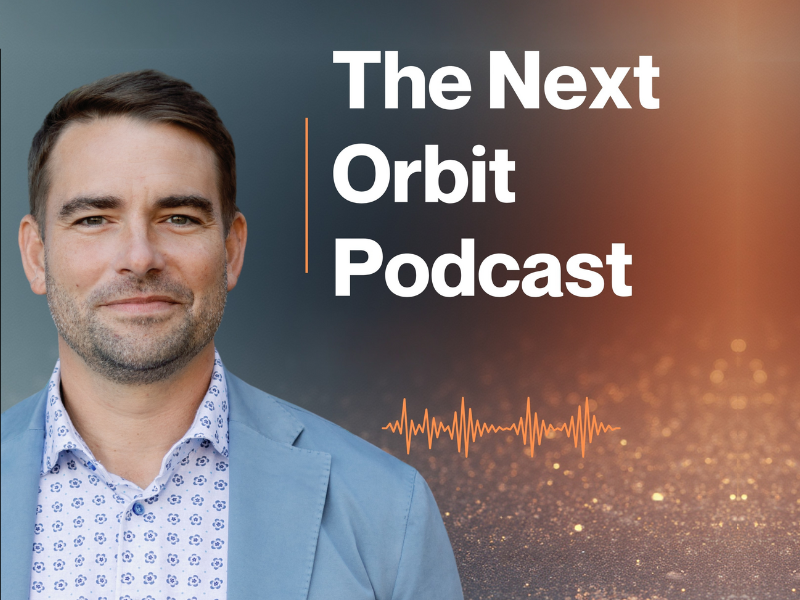
The Next Orbit podcast explores the decisions, tools, and systems behind healthcare data infrastructure through conversations with innovators, data scientists, AI ethicists, and policymakers building the future of interoperability.

Healthcare's digital backbone is being rebuilt right now. The decisions about how data moves, connects, and serves patients are happening in real time. These are conversations that usually happen off-stage, behind closed doors, in technical discussions that don't make it to the broader healthcare community.
Until now.
Welcome to Next Orbit, where we pull back the curtain on health data and the systems behind it. Hosted by Ben Wade and Mike Hunter from Leap Orbit, this podcast explores how smarter, more responsive infrastructure is built—the kind that actually holds up under real-world pressure.
We bring together the voices shaping how healthcare information flows across systems, stakeholders, and state lines. From physicians turned entrepreneurs to data scientists and AI ethicists, from policy makers navigating TEFCA to technology leaders implementing it, we're creating a space where the decisions behind healthcare's digital backbone get discussed openly.
The healthcare interoperability solutions market reached $4.4 billion in 2024 and is projected to grow to $12.4 billion by 2033, reflecting an urgent need across the industry.1 Yet despite this growth, significant gaps remain.
While 70% of U.S. hospitals now participate in interoperable data exchange across all four domains (find, send, receive, and integrate), only 42% routinely send summary of care documents to external hospitals.2 The technical capability exists, but practical implementation continues to challenge healthcare organizations of all sizes.
For health plans, the stakes are particularly high. Directory accuracy directly impacts CMS compliance, member satisfaction, and operational efficiency. For state agencies managing prescription drug monitoring programs, real-time data access can mean the difference between preventing harm and reacting too late. For hospitals and health systems, fragmented provider data creates downstream costs that ripple through every department.
These aren't abstract technology problems. They're workflow challenges, compliance pressures, and patient experience gaps that demand practical solutions.
This podcast isn't about surface-level trends or vendor pitches. It's about the conversations that shape how healthcare data actually works—the decisions, trade-offs, and implementations that happen before anything goes live.
We dive into the tools, standards, and ideas that make healthcare's digital infrastructure functional. These discussions explore interoperability not as a buzzword but as a technical and organizational challenge that requires honesty, urgency, and real-world experience.
Our guests bring all three. Healthcare innovators who've built systems from the ground up. Data scientists working on the analytics layer. AI ethicists navigating the implications of automated decisions in clinical settings. Policymakers setting the frameworks that govern how data moves. Health-tech insiders who understand both the promise and the limitations of current infrastructure.
Specifically, our guests come from across the health-tech and public-health ecosystem:
As Mike Hunter, our co-host, explains: "We're not just talking about pipes. We're talking about impact on care, impact on individuals, impact on populations." The infrastructure matters because of what flows through it and who it serves.
Next Orbit is designed for people working at the intersection of healthcare, data, and technology:
Each episode of Next Orbit digs into specific challenges within healthcare data and interoperability. Drawing from both business and personal perspectives, we explore:
Beyond technical discussions, we explore the human side of healthcare innovation:
We'll examine how organizations are implementing TEFCA, the practical challenges of QHIN participation, and what adoption means for different stakeholders.
As of 2021, 71 percent of U.S. physicians reported feeling overwhelmed by the volume of patient data available.5 More data doesn't automatically mean better care. We're interested in how organizations make data usable, not just accessible.
Fifty-six percent of healthcare stakeholders identified improving patient outcomes as a top driver for interoperability efforts, followed closely by optimizing clinical workflows.6 We'll explore how organizations balance innovation with privacy, security, and regulatory requirements.
Ben Wade brings hands-on experience from the meaningful use era, when the federal government subsidized widespread EHR adoption. He spent years helping physicians and clinical staff implement systems that actually fit their workflows rather than forcing workflows to fit technology.
That focus on practical problem-solving now guides his work with health plans and healthcare enterprises on provider data management and directory solutions.
Ben's passion comes from watching his younger sister, a nurse who worked in ICU and oncology, navigate the healthcare system both as a caregiver and later as a patient following a workplace injury. Those experiences shaped his understanding that technology should give time back to clinicians, not take it away.
Mike Hunter started as an engineer with a mathematics degree but learned that systematizing processes without considering the human element misses the point. His career evolved from technical implementation to consulting and advising, working with state agencies, federal programs, and healthcare enterprises on interoperability strategy, data governance, and modernization initiatives.
Mike's motivation is personal: "If you are sick, you cannot achieve your highest potential. You're only going to be focused on trying to recover. How do we avoid that circumstance for people?" That question drives his work on projects that improve data accessibility for both individual care and population health.
Together, Ben and Mike bring complementary perspectives on healthcare data challenges. Ben focuses on the product and operational side, particularly provider data management and prescription monitoring solutions. Mike leads health tech consulting, working on architecture, integration strategy, and program management for complex state and federal initiatives.
The most important conversations about healthcare data infrastructure often happen in closed meetings, technical workgroups, and implementation discussions that never reach the broader community. Decisions get made about standards, architectures, and data flows without the benefit of collective wisdom or shared experience.
In Ben's words: "Interoperability is no longer optional. It affects patients and providers alike." Yet the path from necessity to implementation remains unclear for many organizations.
We're launching The Next Orbit podcast to bring those off-stage conversations into the open. To create a space where implementers can share what actually works, where data scientists can discuss the challenges of healthcare analytics, where AI ethicists can explore the implications of automated clinical decisions, and where policymakers can hear directly from the people building systems under their frameworks.
Healthcare's digital backbone is being rebuilt with urgency. The infrastructure decisions made today will shape care delivery for decades. This podcast exists to document those decisions, explore the trade-offs, and learn from the people doing the work.
Over the coming months, we'll speak with the people building the next version of healthcare infrastructure:
We'll explore how value-based care models depend on reliable data exchange, what emerging AI capabilities mean for clinical workflows, where compliance and innovation intersect, and how organizations with limited resources compete in an increasingly technical landscape.
Every episode aims to surface insights that don't usually make it into public forums: the trade-offs that shaped a particular decision, the unexpected obstacles that derailed an implementation, the creative solutions that emerged from constraints, the lessons that only become clear after something goes live.
The Next Orbit podcast hosts conversations that matter to anyone building the future of connected care. New episodes release bi-weekly on all major podcast platforms including Apple Podcasts and Spotify. You can also watch episodes on Leap Orbit's YouTube channel with full video.
Follow along on LinkedIn where we share key insights, behind-the-scenes discussions, and opportunities to suggest topics or guests. If you're working on an interoperability challenge worth discussing, or you know someone whose story should be told, reach out to us at inspired@leaporbit.com.
About Leap Orbit
Leap Orbit builds AI-driven systems that simplify healthcare data, improve operational accuracy, and empower organizations to deliver better patient experiences. Our products include provider data management and prescription drug monitoring solutions serving healthcare organizations, health plans, hospitals, and states across the US and Canada. Our health tech consulting practice works with state agencies, federal programs, and healthcare enterprises on interoperability strategy, data governance, and modernization initiatives.
Last reviewed: December 2025
What makes Next Orbit different from other healthcare podcasts?
Next Orbit focuses on practical implementation rather than theory, featuring conversations with people actively solving interoperability challenges. We emphasize measurable impact on care delivery, operational efficiency, and patient experiences rather than abstract technology discussions.
Who should listen to this podcast?
Health IT leaders, data officers, clinical executives, compliance teams, technology vendors, policy makers, program directors, and healthcare entrepreneurs working on data exchange, interoperability, provider directory management, public health monitoring, or related initiatives.
How often do new episodes release?
New episodes release bi-weekly on all major podcast platforms and YouTube.
Can I suggest a guest or topic?
Yes. Reach out through leaporbit.com or connect with Ben Wade or Mike Hunter on LinkedIn. We're especially interested in hearing from implementers with specific examples of what worked (or didn't) in their interoperability efforts.
Do you discuss specific products or is this vendor-neutral?
While our hosts work at Leap Orbit and may reference specific product capabilities when relevant, episode content focuses on broader industry challenges, regulatory developments, implementation strategies, and guest experiences across different systems and vendors.
What's the typical episode length?
Most episodes run 30-45 minutes, designed to fit into commutes or workout routines while providing substantive discussion on complex topics.
Where can I find show notes and additional resources?
Detailed show notes, guest information, and relevant links are available on our website and in podcast platform descriptions.